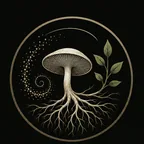
Tarot is a beautiful and difficult tradition, but it comes with baggage some readers cannot easily set down. The Christian iconography of the Rider-Waite deck. The esoteric Hermetic layers added in the nineteenth century. The fortune-telling framing that dominates its popular reception. If any of these has kept you at arm's length from tarot, you are not alone — and there is a growing category of decks built for exactly your objection.
Secular oracle decks are decks that decline to make religious or predictive claims. They use their own invented symbolic systems. They are designed as reflection tools, not divination tools. They tend to look, in the hand, quite similar to tarot decks — beautiful, small, ritual objects — but the frame around them is different.
What a secular oracle deck actually is
A secular oracle deck is a deck of illustrated cards designed for structured reflection, with no claim of religious authority or predictive power. The cards prompt questions rather than answer them. The guidebook explains the deck's symbolic language rather than instructing you in a metaphysical system. The practice is honest about being a psychological tool, not a mystical one.
This is not a lesser deck. It is a differently-framed deck. The best secular oracles are as artistically rich, as symbolically deep, and as useful in daily life as any traditional divination tool — they simply do not ask you to believe anything you cannot in good conscience assent to.
What to look for in a secular oracle deck
Three things distinguish a genuinely secular oracle from a divination deck with the labels changed.
The deck's own mythology, not a borrowed one. A secular oracle should have an original symbolic world — not a repackaged tarot, not a light dusting of Celtic or indigenous imagery it does not belong to. The invented mythology is what makes the deck honest.
A guidebook that explains rather than commands. Look for language like this card often points to… rather than this card means…. The former treats you as a co-reader; the latter as a supplicant.
A practice framing, not a fortune-telling framing. The deck should be presented as something you use daily, not something you consult in a crisis. Daily practice is where oracle decks actually earn their keep.
The Spore Oracle as one example
The Spore Oracle was built to these three tests. Its mythology is entirely original — invented for the deck, borrowed from no living tradition. Its imagery is drawn from the forest floor: mycelium, moon glyphs, companion spirits from the compost heap. Its guidebook is a 115-page walk through the deck's own symbolic vocabulary, presented as a practice manual rather than a book of meanings. And the whole deck is designed for a daily draw — free, no account required.
It is not the only secular oracle deck available, and it will not suit every reader. If forest and fungal imagery does not appeal, another secular deck will. What matters is that the frame fits. The best oracle practice is the one you can conduct without a small inner flinch.
You are allowed to want the ritual without the religion. Most of the interesting practices in a modern life are held that way.