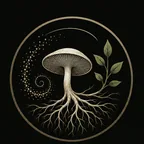
An oracle deck is a set of illustrated cards, usually between thirty and sixty in number, drawn from a shuffle to prompt reflection. That is the whole definition. Everything else — the imagery, the mythology, the meanings, the ritual — is what a particular deck adds to that basic shape.
This is worth saying plainly because oracle decks are often conflated with tarot, with fortune-telling, or with a particular new-age aesthetic that some readers find off-putting. None of those associations are necessary. An oracle deck is a small physical object for structured reflection. Whether it is anything more than that depends entirely on the reader.
How an oracle deck differs from tarot
Tarot has a fixed structure. Seventy-eight cards. Four suits. Twenty-two Major Arcana. A shared symbolic system that most tarot decks reference, however loosely. If you learn one tarot deck, you can partially read another.
An oracle deck has no fixed structure. Each deck invents its own. There may be thirty-six cards or sixty. There may be families, seasons, glyphs, animals, colours — whatever the deck's designer chose. Learning one oracle deck teaches you almost nothing about another, because each is a self-contained symbolic language.
This is a feature, not a limitation. It means an oracle deck can be tuned to a specific practice in a way tarot cannot. A deck of forest imagery for a nature-based practice. A deck of grief imagery for a bereavement companion. A deck of writing prompts for a stuck novelist. The lack of a fixed structure lets the deck fit its practice exactly.
What an oracle deck is useful for
The honest answer is that an oracle deck is a scheduling device and a mirror. It reserves ten minutes of your morning for the question what is actually going on with me today? and it hands you an image rich enough to project onto. That is the whole mechanism.
You do not need to believe the cards are magic for this to work. You need to be willing to sit with the image you drew, even if it is not the one you wanted, and let it name something.
What an oracle deck is not for
It is not for predicting the future. It is not a substitute for therapy, medical advice, or a difficult conversation with an actual human. It is not a way of outsourcing decisions you already know the answer to. It will not tell you whether to leave your partner or take the job. It will only tell you what you have been avoiding thinking about.
This is a smaller claim than most oracle marketing makes. It is also the true one, and the useful one.
The Spore Oracle as one example
The Spore Oracle is a thirty-six card oracle deck built around an original mythology of the forest floor — thirteen Moon Glyphs, thirteen Companion Spirits, four Threshold Archetypes, and six Era Cards. It makes no religious claim and no fortune-telling claim. It is designed for a slow, reflective daily practice.
If you want to see what a specific oracle deck looks like in practice, the 36-card gallery shows the full imagery, the mythology explains the invented world behind it, and a free daily draw is available with no account. Draw one card, sit with it for a minute, and decide for yourself whether the practice suits you.
That is the only real test of an oracle deck.